
 Apparel Boxes
 Bakery Boxes
 Cosmetics Boxes
 Medicine Boxes
 Retail Boxes
2026 Packaging Trends: What Customers Will Notice First?
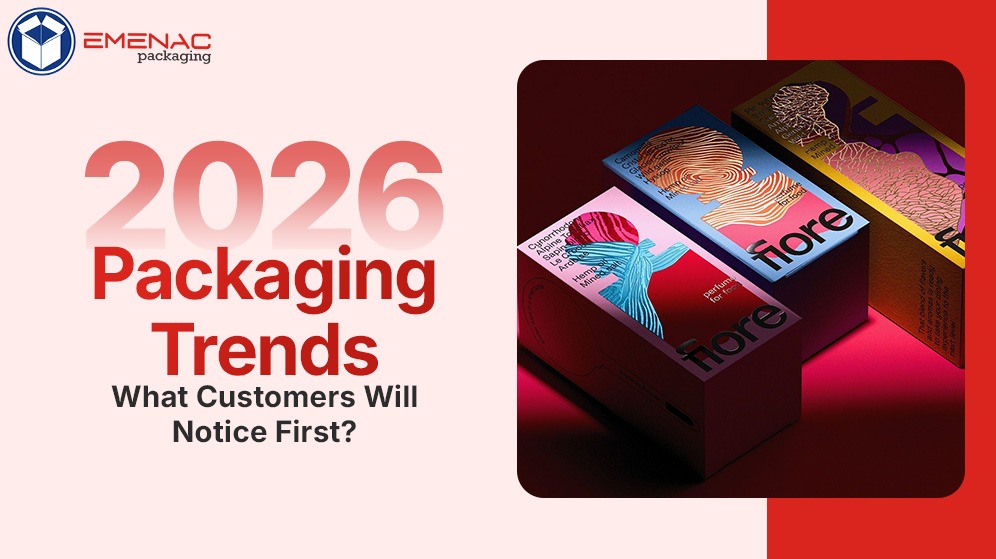
Packaging is no longer assessed on appearances. Customers are assessing the texture, materials, and meaning. In 2026, finishes will speak louder than labels. Matte finishes, soft touch coatings, and weak gloss finishes contrast will form our first impression.
Research has shown that more than 70% buyers associate the feel of the packaging with the quality of the product. 60% buyers said that they are likely to keep premium packaging boxes. These conditions contribute to trust and memory.
Sustainable finishes are even more important now. Water-based coatings and recyclable laminations are introducing new options. Consumers can tell when packaging is elegant but sustainable and when it is just wasteful and excessive.
It is this transition that heralds a new era in 2026 packaging trends, as the convergence of finishes, materials, and intent creates an immediate connection.
2026 Packaging Trends That Form First Impressions
The packaging catches the eyes of the consumers even before they read the content inside. When texture, weight, and clarity inform early decisions. In 2026, brands are designing for that moment of pause.
Packaging now represents values as well as visuals. Sustainability has shifted from promise into proof. Buyers want form, honesty, and well-executed thought.
Design decisions are also influenced by regulation. This encourages brands to rethink materials. This means using smarter formats and fewer components.
Together, these trends map out 2026 packaging trends to be functional, expressive, and on-trend with consumer expectations.
1. Sustainability as a Visual Signal
Packaging sustainability needs to look sincere. Organic rankles, muted colours signify responsibility. Buyers can tell very quickly when assertions are authentically felt.
Bio-based materials are becoming more prevalent. Seaweed films and mycelium forms appeal to curiosity.
They have recycling prompts clearly labelled. This kind of transparency breeds trust from the very first look.
2. Reuse and Refill: The New Normal
Single-use packaging is perceived as dull by an increasing number of consumers. Refill systems are a signal of long-term thinking. Durable customers noticed immediately.
Glass and aluminum containers have a solid, tactile feel and are easily repurposed. Concentrated refill packages pack less waste and take up less space.
Designs now feature easy open and refill. Functional features impress. Convenience becomes brand value.
3. Mono Material Packaging Choices
Consumers struggle with complicated packaging. Mixed materials complicate the matter. Mono-material packaging formats remedy this problem.
All paperboard or all aluminum packs offer simplified recycling. Wouldn’t it look and feel cleaner and more deliberate? Consumers understand that endeavour even more quickly.
These designs reduce processing steps. They also align with circular goals. Simplicity is a visible benefit.
4. Clear Labeling
Shoppers are paying more attention to labels now. Wonder whether some unclear claims may not really be so confident in demand. Some plain, simple facts will get attention.
Certifications and lifecycle information provide transparency. Straightforward language allows customers to make decisions faster.
Brands that articulate impact rise above. This openness is a sign of confidence. It contributes to positive first impressions.
5. Smart Packaging Integration
Technology is redefining the customer pack interaction. QR codes allow for a deeper interaction. NFC tags are used to verify authenticity.
They don’t give a sense of cluttering up the aesthetics. They keep it at subtle, purposeful levels. Customers are alerted to the opportunity to find out more.
Features, such as interactive elements, enhance the experience. The package is a door, not a wall. This compromise feels both modern and workable.
6. AI Guided Structural Design
Artificial intelligence impacts both design and productivity. Appropriately sized packaging minimizes waste. Buyers like small, neat packages.
Balanced proportions feel intentional. Designs also change at a faster rate to keep in step with industry trends.
7. Inclusive And Accessible Packaging
Convenience is more important nowadays. Ergonomic grips and clean, legible typefaces are the winners. For young and old, all persons of all ages may rejoice.
Bold contrasts aid readability. These elements enable inclusion. These are thoughtful decisions. Designing for accessibility feels like an oxymoron. It drives you crazy. Customers are loyal to brands that think of everyone.
8. Minimalism
Minimalist design has stood the test of time. Now it’s warmer, but still crisp. Hand-drawn illustrations and textured finishes help make your brand more memorable.
Negative space provides a sense of serenity. Strong typeface adds authority to the message. Customers feel a sense of coherence and symmetry.
9. Retro Futurism and Cultural Roots
Nostalgia arrives in a contemporary air. Retro colours paired with state-of-the-art materials. This combination of classic and new is a powerful weapon.
Decorative motifs add meaning. Stories are told with local patterns. They connect with customers. These patterns attract interest. Packaging becomes performative.
10. Lightweight Luxury Appeal
The weight of the container no longer equates to quality for the trade. Customers value elegant simplicity. Lightweight aligns with today’s aesthetics.
High-quality finishes replace bulk. Intelligent designs help to reduce instead of increase the demand for resources.
This transition is consistent with mindful purchasing. And it functions in a refined manner. Customers can tell the difference right away.
Why These Changes Matter NOW
Customers make up their minds fast. Packaging sets expectations in a matter of seconds. Design decisions matter to trust.
Adaptive brands get noticed. Resistant ones feel 2D. From across the Industrial world, 2026 packaging trends demonstrate an evolving definition, reconsidering our effect on the planet.
Looking Ahead
The future of packaging is smart and sustainable. Customers know what they value. Design needs to respond with intent.
Materials, finishes, and technology are now in the spotlight. So, each factor affects our perception. Every detail counts. Brands that plan early will lead.
Concluding Thoughts
In 2026, packaging would communicate through texture, transparency, and purpose in the environment. Customers perceive sincerity first. They react to designs they deem responsible and sophisticated.
Emenac Packaging Canada is on track with this change of trend. Our team designs packaging based on contemporary needs and brand image. We develop the balance between structure, finish, and material.
If you are considering packaging design in the future, now is the time to move. Get a bespoke quote. Contact us for more information and expert advice


